
What Is a VRF System? Everything Fort Worth Property Owners Need to Know
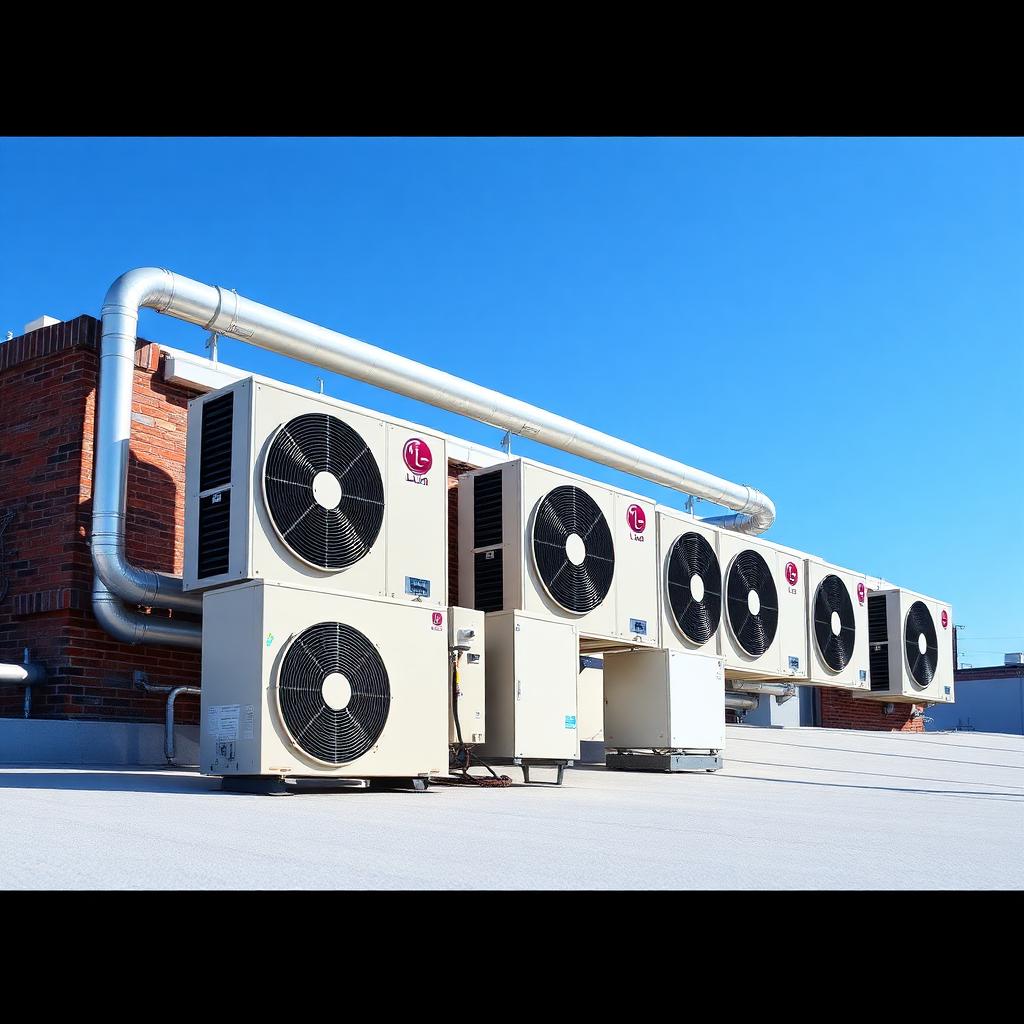
If you own a commercial building, manage a property portfolio, or are planning a custom home or major renovation in Fort Worth, chances are you've heard the term VRF system from an architect, engineer, or contractor. VRF — short for Variable Refrigerant Flow — is the most significant advancement in comfort-conditioning technology in the last thirty years, and it's quickly becoming the standard for high-performance buildings across North Texas.
This guide is written by the LG-certified VRF specialists at Innovative Air LLC. We install, commission, service, and troubleshoot VRF systems every week across Fort Worth, Arlington, Mansfield, Burleson, and the greater DFW metroplex. What follows is the plain-English explanation of VRF that we wish more property owners had before they made an equipment decision — how the technology actually works, where it shines, where it doesn't, and what to look for in a contractor.
What Is a Variable Refrigerant Flow (VRF) System?
A VRF system is a modern HVAC platform that uses refrigerant — not ducted air or chilled water — as the medium to move heat between one or more outdoor condensing units and multiple indoor units distributed throughout a building. What makes it variable is the inverter-driven compressor, which ramps up and down in real time to deliver exactly the amount of refrigerant each zone needs at that moment. Traditional compressors are either fully on or fully off; a VRF compressor can operate at any point along a wide capacity range, matching load precisely.
The result is a system that behaves less like a machine and more like a nervous system: sensors in every zone continuously feed data to a central controller, and the outdoor unit modulates refrigerant flow to each indoor unit independently. One conference room can be aggressively cooling while a shaded office next door is barely running, and — with a heat-recovery VRF — the heat rejected from that conference room can be captured and delivered to a cold north-facing suite at the same time. That's not marketing; it's the fundamental physics of how the system is engineered.
How VRF Technology Works (In Plain English)
Strip away the acronyms and a VRF system has three main parts:
- Outdoor condensing unit(s). One or more inverter-driven compressors sit outside — usually on the roof of a commercial building or on a side-yard pad at a residence. Unlike a traditional AC condenser, this unit continuously varies its output based on total building demand.
- Refrigerant piping network. Small-diameter copper lines run from the outdoor unit through the building to each indoor unit. Because the medium is refrigerant instead of air or water, the pipes are far smaller than ductwork or hydronic loops — a huge advantage in retrofits.
- Indoor units and controls. Each zone has its own indoor unit — wall-mounted, ceiling cassette, concealed ducted, floor-mounted, or slim-duct. Every indoor unit has an electronic expansion valve that meters refrigerant precisely to that zone. Wall thermostats or a central touchscreen (and, in commercial buildings, a BMS interface) tell the system what each space needs.
Here's the key insight: because the compressor modulates and each indoor unit has its own metering valve, the system never wastes energy conditioning a room that doesn't need it. A traditional split system heats or cools the whole building at one temperature from one thermostat, whether every room needs it or not. VRF conditions only the zones that are calling for it, at only the capacity they need. That single design choice is where nearly all of VRF's benefits come from.
Benefits of VRF Systems
The efficiency and comfort numbers behind VRF are not marketing claims — they're the direct outcome of variable-capacity operation and zone-level control. In real Fort Worth installations, we consistently see:
- 30–40% lower energy costs vs. traditional systems
- Precise, room-by-room zoning eliminates hot and cold spots
- Simultaneous heating and cooling (heat-recovery models)
- Whisper-quiet indoor units (as low as 19 dB)
- Longer equipment life — typically 20–25 years
- Compact outdoor footprint frees up rooftop or side-yard space
- No large ducts — ideal for retrofits and historic buildings
- Advanced controls integrate with BMS, BACnet, and smart thermostats
For commercial property owners, the operating-cost story is usually what closes the decision. A rooftop package unit or ducted split running fixed-speed compressors in the Texas heat runs at full load hour after hour; a VRF compressor at the same building might spend 70% of the summer operating below 50% capacity, drawing a fraction of the electricity. Over a 20-year building horizon those savings dwarf the up-front premium.
For homeowners, the story is usually comfort. VRF eliminates the "one thermostat, one temperature for the whole house" compromise that ducted systems force. The upstairs primary bedroom stays 70 at night while the guest suite stays off. The kitchen doesn't roast during dinner prep. The bonus room over the garage isn't the hottest room in the house every August. That level of control is the reason VRF has become the default choice on high-end custom homes across DFW.
Where VRF Systems Are Commonly Used
VRF is not the right answer for every building, but the list of places where it is the right answer is broader than most owners realize. We regularly install and service VRF in:
- Office buildings and professional suites
- Medical and dental offices
- Retail centers and mixed-use developments
- Restaurants and hospitality
- Schools, universities, and training facilities
- Churches and worship centers
- Multi-family buildings and condominiums
- Historic and adaptive-reuse properties
- Luxury custom homes and whole-home retrofits
- Home additions, guest houses, and ADUs
Commercial vs. Residential VRF Applications
The same core technology powers commercial and residential VRF, but the design priorities are different — and so is what the installation looks like.
On the commercial side, VRF is typically specified for its zoning, energy savings, and building-management integration. A single 20-ton heat-recovery system might drive 30 indoor units across an office floor, tied into a BACnet BMS for scheduling, setback, and after-hours override billing. In multi-tenant buildings, VRF makes it easy to sub-meter individual suites so tenants pay only for their own usage. For historic and adaptive-reuse projects where running ductwork is impossible, VRF is often the only viable path to modern comfort. Explore our commercial HVAC services for full design–build capability.
On the residential side, VRF (and its smaller sibling, the multi-zone ductless mini-split) is chosen for comfort, quiet operation, and efficiency. Whole-home VRF is common on luxury builds where the architect wants to eliminate soffits and chases. Partial VRF is even more common — pairing a traditional ducted system for the main floor with VRF for a finished attic, a second-story addition, a garage apartment, or a sunroom. Learn more about our residential HVAC services and our dedicated ductless mini-split installations for smaller residential applications.
VRF vs. Traditional HVAC
The question we hear most often from Fort Worth property owners is straightforward: Should I stay with a conventional system or move to VRF? The honest answer depends on the building, but the trade-offs are consistent.
| Feature | VRF System | Traditional Ducted HVAC |
|---|---|---|
| Capacity control | Variable — inverter modulates continuously | Fixed — on/off or 2-stage at best |
| Zoning | True zoning — every indoor unit independent | Damper-based zoning at best; usually 1 zone |
| Simultaneous heat & cool | Yes (heat-recovery models) | No |
| Energy efficiency | Highest in the industry (IEER 20+ common) | Moderate (SEER2 14–18 typical) |
| Ductwork required | Minimal or none | Full duct system required |
| Noise level | Very quiet (19–35 dB indoor) | Moderate (40–55 dB at registers) |
| Equipment life | 20–25 years | 12–15 years (Texas climate) |
| Upfront cost | Higher (20–50% premium) | Lower |
| Operating cost | 30–40% lower | Baseline |
| Contractor pool | Certified specialists only | Any HVAC contractor |
The short version: for a small single-family home with existing good ductwork, a traditional replacement is usually the right call. For anything with zoning headaches, difficult duct routing, high electric bills, or a long ownership horizon, VRF earns its premium back. If you're weighing a repair-vs-replace decision on aging equipment, our system replacement team can model the numbers both ways.
VRF vs. Ductless Mini-Splits
This is the comparison that trips up the most homeowners — and honestly, some contractors too. VRF and ductless mini-splits share the same underlying technology (inverter compressors, refrigerant-based zoning, electronic expansion valves), but they are engineered for different scales and use cases.
| Feature | VRF System | Ductless Mini-Split |
|---|---|---|
| Typical scale | Whole building; 8–60+ indoor units | 1 room to 5 zones |
| Best for | Commercial buildings, luxury homes, retrofits | Additions, garages, single rooms, ADUs |
| Simultaneous heat & cool | Yes (heat recovery) | No |
| Controls & BMS | BACnet, Modbus, full BMS integration | Wall thermostats and app control |
| Upfront cost | Higher (engineered project) | Lower (packaged solution) |
| Installation complexity | High — requires design and commissioning | Moderate — straightforward for pros |
A useful way to think about it: every VRF system is a scaled-up, more sophisticated cousin of the ductless mini-split, but not every mini-split is a VRF. If your project needs 1–5 zones and doesn't need BMS integration, a ductless mini-split is almost always the better economic choice. If you're conditioning an entire building or need heat-recovery capability, you need true VRF — and you can read the full commercial and residential capabilities on our VRF Specialists page.
Common VRF Problems (and What Causes Them)
VRF equipment is remarkably reliable when installed correctly. When it isn't, the problems are almost always traceable to one of a small handful of root causes:
Refrigerant leaks
The single most common VRF issue. Long refrigerant runs, dozens of brazed joints, and hundreds of flare connections mean that any installation shortcut — improper brazing without nitrogen purge, over-torqued flares, missing pressure test — will eventually leak. A slow leak degrades performance long before it triggers an alarm.
Communication faults
Indoor units talk to the outdoor unit and central controller over a two-wire communication bus. Miswired polarity, damaged wire, or terminated resistors in the wrong place will cause intermittent 'no communication' error codes that are miserable to trace without a manufacturer-trained tech.
Inverter board failures
The variable-speed inverter is the brain of the compressor. It's sensitive to voltage sags, surges, and dirty power — problems that are unfortunately common in older Texas commercial buildings. A whole-building surge protector is one of the cheapest ways to protect a six-figure VRF investment.
Dirty indoor coils
Because VRF indoor units are quiet, owners often forget they exist — and forget to change filters. A dirty coil kills capacity, freezes lines, and eventually causes flood-out from an overflowing drain pan. Filter and coil maintenance is non-negotiable.
Improper commissioning
VRF systems require a full commissioning process — pressure test, triple evacuation, refrigerant charge verification, controls address setting, and functional test in every mode. Skipping any of these steps means the system will 'work' for a season or two and then fail in ways that look like equipment defects but are actually installation defects.
Maintenance Best Practices
A VRF system is a long-term asset, and it should be maintained like one. The payoff for disciplined maintenance is enormous: 20+ years of equipment life, stable operating costs, and no six-figure surprise replacements. What a proper VRF maintenance program looks like:
- Replace or clean indoor unit filters every 1–3 months
- Annual refrigerant pressure and superheat/subcooling checks
- Inspect and clean indoor evaporator coils yearly
- Verify condensate drains and pumps are clear
- Check inverter board diagnostics and error history
- Update controller firmware and BMS integrations
- Inspect brazed joints and flare connections for micro-leaks
- Clean outdoor condenser coils and clear surrounding debris
We build custom VRF maintenance agreements for commercial and residential clients across Fort Worth — quarterly for high-utilization commercial systems, semi-annual for residential. See our HVAC maintenance program for details.
Signs Your VRF System Needs Repair
VRF systems usually give you warning before they fail. The trick is knowing what to look for — and calling a certified VRF technician early, before a small issue cascades into a compressor replacement.
- Uneven temperatures between zones
- Error codes on indoor units or central controller
- Ice forming on refrigerant lines
- Rising electric bills with no change in usage
- Compressor runs constantly or short-cycles
- Unusual noises from indoor cassettes or outdoor units
- Water leaks from indoor units
- System stops responding to controls or BMS
Important: VRF systems should only be serviced by manufacturer-certified technicians. A general HVAC contractor without VRF training can misdiagnose an error code, incorrectly charge the refrigerant, or damage the inverter board — turning a $500 repair into a $15,000 problem. If you're seeing symptoms, call a specialist.
Our team provides same-day VRF repair in Fort Worth for commercial and residential systems. When the outage can't wait, our emergency HVAC service is available 24/7. For non-VRF cooling issues, our AC repair team covers all of DFW.
Is VRF Worth the Investment?
This is the question every property owner ends up asking. The honest answer: it depends on the building, the ownership horizon, and how much the current system is costing you in energy and comfort. Here's how we walk clients through it.
You are a strong candidate for VRF if: you own the building (or plan to for 10+ years), you have chronic hot/cold zones that traditional zoning hasn't solved, your electric bill is punishing, you're doing a major renovation or new construction, your ductwork is failing or was never adequate, you need to preserve architectural finishes, or you're conditioning a multi-tenant or multi-use property that would benefit from sub-metering.
A traditional system may still be the better call if: your existing ductwork is in good shape, the building is a straightforward single thermal zone, budget is the overriding constraint, or the ownership horizon is short. There's no shame in a well-installed traditional system — we install them every day.
What we won't do is push VRF on a project that doesn't need it. On every VRF consultation we run the numbers both ways and give you the honest comparison: upfront cost, annual operating cost, expected life, maintenance obligation, and payback period. Then you decide.
Why Choosing an Experienced VRF Contractor Matters
There is no HVAC category where the installer matters more than VRF. The equipment itself is engineered to extraordinary tolerances — but every one of those tolerances depends on the installer honoring them. Refrigerant piping has to be sized, routed, brazed under nitrogen, pressure tested, and triple evacuated. Controls have to be addressed, wired, and commissioned per the manufacturer's exact spec. Charge has to be calculated to the ounce based on pipe run length.
A general HVAC contractor without VRF certification can and will get some of this wrong. When they do, the failures typically don't show up on day one — they show up in year three or four, and they look like equipment defects. By then the manufacturer warranty may be void because the installer wasn't certified, and the owner is left holding an expensive bag.
Ask any VRF contractor you're considering these questions before you sign:
- Are you factory-certified by the manufacturer of the equipment you're proposing?
- How many VRF systems have you commissioned in the last 24 months?
- Can you provide references from projects similar to mine?
- Do you handle both design and installation, or subcontract one of them?
- What does your commissioning documentation look like?
- What is your process if the system throws a fault after commissioning?
If the answers are vague, keep shopping. VRF is not a category to learn on.
Why Innovative Air LLC Is Qualified to Install and Service VRF
Innovative Air is Fort Worth's LG-certified VRF specialist. We've been serving the DFW metroplex since 2000, and VRF has been a core part of our commercial and high-end residential practice for over a decade. What sets our VRF work apart:
- LG-certified VRF specialists
- Serving Fort Worth & DFW since 2000
- Veteran-owned and family-owned
- MBE-certified for commercial procurement
- Design–build capability for new construction and retrofit
- 24/7 emergency service for commercial VRF
- Manufacturer-spec commissioning and warranty protection
- Detailed, itemized proposals — no surprises
We're proudly veteran-owned, family-owned, and MBE-certified, and we serve every corner of the metroplex — see our service areas for the full list. Whether you're designing a new commercial build, retrofitting a historic property, or adding VRF to a custom home, we'll walk the project with you, model the numbers honestly, and commission the system to spec.
Suggested Reading
Continue exploring VRF and related HVAC topics:
- VRF Specialists in Fort Worth — our full commercial and residential VRF capabilities.
- Ductless Mini-Splits — VRF's smaller sibling for single-zone and additions.
- Commercial HVAC — rooftop units, split systems, service contracts, and design–build.
- Residential HVAC — whole-home comfort solutions for DFW homeowners.
- AC Repair — same-day repair on all major brands.
Frequently Asked Questions
Ready to Talk VRF?
Whether you're planning a ground-up commercial build, weighing a VRF retrofit for an existing building, adding a zone to your home, or troubleshooting a VRF system installed by someone else, we can help. Call Innovative Air LLC at (817) 966-2665 or request a VRF consultation. We'll walk your property, listen to your goals, and give you a straight answer about whether VRF is the right investment — and if it is, we'll design and commission it to the manufacturer's exact spec.
Need HVAC Service?
Innovative Air provides fast, dependable HVAC service for homeowners and businesses throughout Fort Worth and the surrounding DFW area.
Call (817) 966-2665
Related Articles
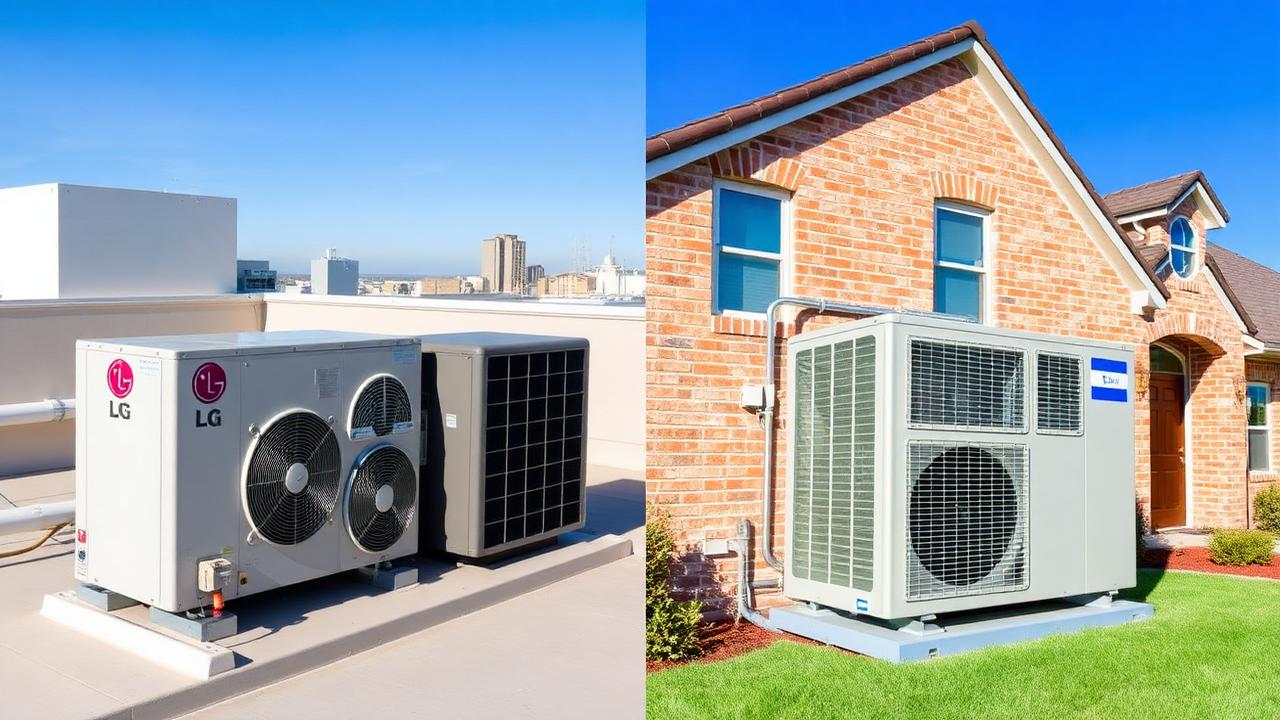
LG VRF vs. Traditional Central Air: Which Is Better for North Texas Homes?
A side-by-side comparison of LG VRF systems and traditional central air conditioning for DFW homes — zoning, energy efficiency, comfort, cost, installation, lifespan, and how to decide which system fits your house.
Read More
Air Purifier vs. Humidifier: What's the Difference?
Air purifiers and humidifiers both improve your home's air, but they do very different jobs. Learn how each one works, which helps with allergies, which fixes dry air, and which is best for Texas homes.
Read More
How to Clean an AC Drain Line
A clogged AC drain line can cause leaks, water damage, and a system that shuts down. Learn what the drain line does, the warning signs of a clog, safe steps homeowners can check, and when to call an HVAC pro.
Read More