
LG VRF vs. Traditional Central Air: Which Is Better for North Texas Homes?
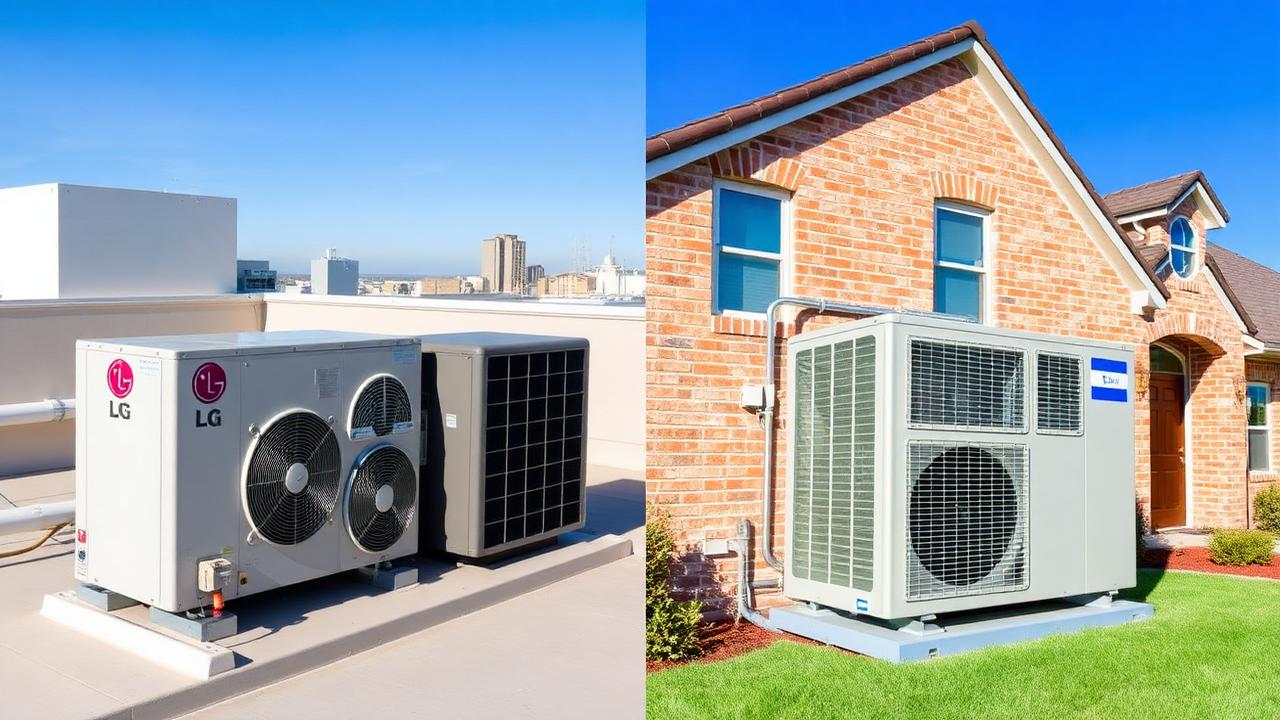
Nearly every North Texas home cools the same way: one outdoor condenser, one indoor air handler, one thermostat, and a web of ductwork running through a 140-degree attic. It's a design that works — until August, when the upstairs won't drop below 78, the master bedroom is freezing, and the electric bill arrives.
LG VRF (Variable Refrigerant Flow) takes a fundamentally different approach: an inverter-driven outdoor unit feeds refrigerant to multiple indoor units, and each one conditions its own zone on demand. As Fort Worth's LG-certified VRF specialists, we install both technologies every week — so this is an honest comparison, including the cases where traditional central air is still the right call.
The Core Difference: Fixed Output vs. Variable Output
A traditional central system is essentially a light switch. The compressor is either off or running at 100%, so it overshoots the setpoint, shuts down, drifts warm, and slams back on. Every one of those cycles costs energy and creates the temperature swings you feel.
A VRF system is a dimmer. The inverter compressor modulates continuously, and refrigerant flow to each indoor unit is metered independently, so the system delivers exactly the capacity each room needs at that moment. Instead of blasting and coasting, it settles into a long, low, quiet run — the operating mode where HVAC equipment is most efficient and dehumidifies best.
Side-by-Side Comparison
| Factor | LG VRF | Traditional Central Air |
|---|---|---|
| Zoning | True per-room control | One zone (or dampers, at best) |
| Compressor | Variable-speed inverter | Single- or two-stage |
| Cooling energy use | 25–40% lower, typically | Baseline |
| Duct losses | None to minimal | Commonly 15–25% in attics |
| Humidity control | Excellent (long low-load runs) | Fair; poor if oversized |
| Indoor noise | ~19–30 dB | Noticeable air-handler and duct noise |
| Expected lifespan | 20–25 years | 12–15 years in DFW |
| Upfront cost | 20–50% higher | Lowest first cost |
| Retrofit friendliness | High — small refrigerant lines | Needs duct space |
| Installer requirement | Certified VRF specialist | Any qualified HVAC contractor |
Why Zoning Matters So Much in North Texas
DFW homes have a specific comfort problem: brutal west sun, large second stories, and ducted air that has to travel through unconditioned attic space to reach the rooms furthest from the air handler. The result is predictable — the thermostat hallway is comfortable while the bonus room and the west bedrooms are ten degrees warmer. Turning the whole house down to fix one room means overcooling everything else and paying for it.
VRF solves that at the equipment level rather than with band-aids. Each zone has its own indoor unit, sensor, and setpoint, so the hot room gets more capacity and the cold room gets less — simultaneously, automatically, all summer.
Where LG VRF Clearly Wins
- True room-by-room zoning without dampers or duct redesign
- 25–40% lower cooling energy use in typical DFW homes
- Steady temperatures instead of hot-then-cold swings
- Better shoulder-season humidity control from long, low-capacity runs
- Indoor units as quiet as ~19 dB
- 20–25 year service life vs. 12–15 for ducted systems
- Works where ductwork can't go — additions, older homes, garages, ADUs
- Smart controls, per-zone scheduling, and remote diagnostics
Where Traditional Central Air Still Makes Sense
- Lower upfront cost for a straightforward replacement
- Simple, familiar equipment any contractor can service
- One thermostat and one filter to manage
- Reuses existing ductwork when the ducts are in good shape
- Easy whole-home air cleaning and filtration add-ons
- Fewer indoor components to maintain
Be skeptical of any contractor who recommends one technology before measuring your home. Load calculation, duct condition, insulation, window orientation, and how you actually use each room should drive the recommendation — not the equipment the truck happens to be stocked with.
Cost of Ownership: Looking Past the Install Price
VRF costs more on day one. The fair comparison is total cost over the life of the equipment: lower monthly cooling and heating bills, fewer repair calls because the compressor rarely runs at full load, and a service life that often spans the lifetime of two traditional systems. If you plan to stay in the home, the math frequently favors VRF. If you're selling in two years, it usually doesn't.
There's also a comfort dividend that never shows up in a payback calculation — no arguing over the thermostat, no space heater in the office, no bedroom you avoid in July.
Which One Fits Your Home?
Choose LG VRF if you have:
- Rooms that never match the thermostat (upstairs bonus rooms, west-facing bedrooms)
- Summer electric bills you'd like to cut permanently
- An addition, sunroom, garage conversion, or ADU with no duct path
- An older Fort Worth home where ductwork would mean major demolition
- A high-end remodel where quiet, precise comfort matters
- Family members with very different temperature preferences
Choose traditional central air if you have:
- A single-story home with tight, well-sealed, correctly sized ducts
- A tight replacement budget and a failed system that needs to go now
- A rental or short-hold property where payback time is limited
- Even solar exposure and consistent loads across the house
A Middle Path: Hybrid Systems
You don't always have to pick one. A common DFW solution is keeping a high-efficiency ducted system for the main living areas and adding a ductless mini-split for the problem space — a garage gym, converted attic, sunroom, or home office. It's the least expensive way to get zoned comfort exactly where the existing system fails.
Installation Quality Decides the Outcome
VRF is unforgiving of shortcuts. Refrigerant piping must be sized and routed to spec, brazed under a nitrogen purge, triple-evacuated, and charged by calculated line length — then commissioned with the controls verified zone by zone. Done right, the system runs for two decades. Done casually, it throws error codes, underperforms, and can lose its warranty coverage.
That's why VRF should only be installed by a manufacturer-certified contractor. Innovative Air has been an LG-certified VRF specialist in Fort Worth serving homes and commercial buildings across DFW, and we also handle conventional residential HVAC, system replacement, and AC repair — so our recommendation isn't driven by only having one option to sell.
Not sure which direction fits your house? Read our complete guide to VRF systems or call (817) 966-2665 for an in-home evaluation.
Frequently Asked Questions
Need HVAC Service?
Innovative Air provides fast, dependable HVAC service for homeowners and businesses throughout Fort Worth and the surrounding DFW area.
Call (817) 966-2665
Related Articles
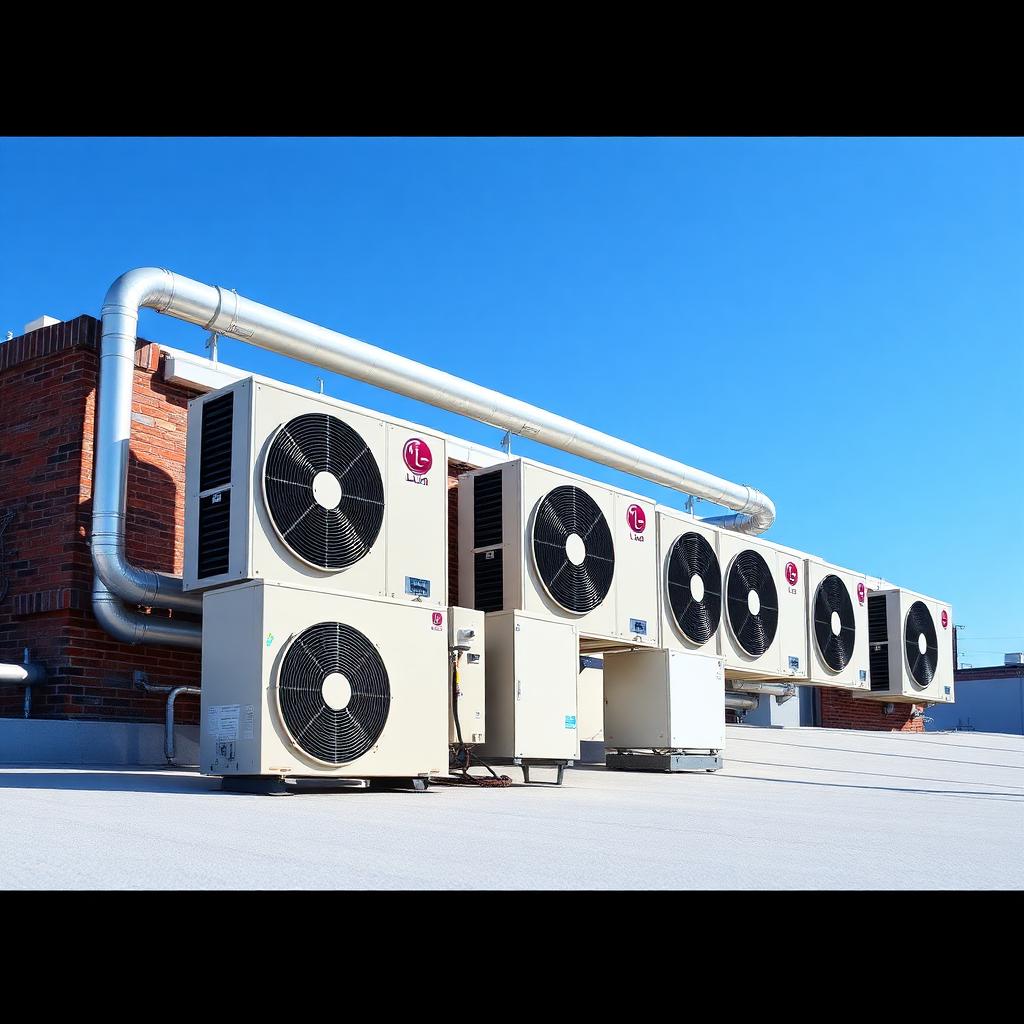
What Is a VRF System? Everything Fort Worth Property Owners Need to Know
A complete Fort Worth guide to Variable Refrigerant Flow (VRF) systems — how they work, benefits, commercial and residential uses, VRF vs. traditional HVAC, VRF vs. mini-splits, maintenance, and when to call a VRF specialist.
Read More
Air Purifier vs. Humidifier: What's the Difference?
Air purifiers and humidifiers both improve your home's air, but they do very different jobs. Learn how each one works, which helps with allergies, which fixes dry air, and which is best for Texas homes.
Read More
How to Clean an AC Drain Line
A clogged AC drain line can cause leaks, water damage, and a system that shuts down. Learn what the drain line does, the warning signs of a clog, safe steps homeowners can check, and when to call an HVAC pro.
Read More